One of the biggest myths in filmmaking is that great cinema requires great budgets. It’s an understandable misconception. We are constantly surrounded by behind-the-scenes videos featuring enormous lighting rigs, massive crews, and productions that cost more in a single day than many independent filmmakers spend on an entire project.
It’s easy to believe that creative limitations automatically mean creative compromise.
They don’t.
Some of the most visually striking and emotionally memorable films began with little more than a great idea, a small team, and a filmmaker who understood how to maximize every available resource. Budget limitations can be frustrating, but they can also become your greatest creative advantage.
The question isn’t, “What can I afford to make?”
It’s, “How can I make something unforgettable with what I already have?”
Limitations Are Creative Tools
Every filmmaker starts somewhere. Large budgets are rarely the reason audiences connect with a story.
They remember:
- Powerful performances.
- Compelling visuals.
- Original ideas.
- Emotional authenticity.
- Memorable moments.
None of those require expensive equipment.
In fact, creative limitations often force directors to become more inventive. When you can’t rely on expensive production design or elaborate visual effects, you begin asking more interesting questions:
- Can this scene be stronger with less?
- Is there a better location available for free?
- Can natural light become part of the visual style?
- What objects already exist in this environment that tell a story?
Constraints encourage creative problem-solving—the most valuable skill any filmmaker can develop.
Location Scouting Is an Art Form
Independent filmmakers frequently underestimate the importance of locations.
An extraordinary location can instantly elevate production value without costing a fortune.
Look beyond traditional film locations:
- Local cafés during off-hours.
- Community centers.
- Public spaces.
- Friends’ apartments.
- Rooftops.
- Small businesses willing to collaborate.
- Creative studios and galleries.
The best location isn’t necessarily the most expensive one. It’s the one that complements your story naturally.
Ask yourself:
If I removed all the production design, would this space still feel cinematic?
Interesting architecture, textures, and natural light often contribute more to a film’s visual identity than expensive decorations ever could.
Lighting Is More Important Than Equipment
Many filmmakers obsess over cameras while overlooking lighting.
Audiences will forgive a surprising amount of technical imperfection if the image feels intentional and emotionally engaging.
Natural light remains one of the most powerful tools available to independent creators.
Learn to work with:
- Golden hour.
- Window light.
- Streetlights.
- Practical lights within locations.
- Shadows and silhouettes.
Rather than fighting your lighting limitations, build your visual style around them.
Some practical techniques include:
- Shooting near large windows whenever possible.
- Scheduling scenes around natural lighting conditions.
- Using inexpensive diffusion materials.
- Designing compositions that embrace darkness rather than attempting to eliminate it.
Good lighting is rarely about spending more money. It’s about paying closer attention.
Production Design Is Storytelling
Production design doesn’t require elaborate sets or expensive props.
Sometimes all it takes is asking:
What belongs in this character’s world?
A thoughtfully chosen object can communicate more than an entire room filled with decorations.
Instead of spending money filling every frame, focus on meaningful details:
- Personal objects.
- Interesting textures.
- Color relationships.
- Environmental storytelling.
Minimalism frequently feels more cinematic than visual clutter.
Independent filmmaking rewards intentional creative choices.
Keep Your Crew Small and Flexible
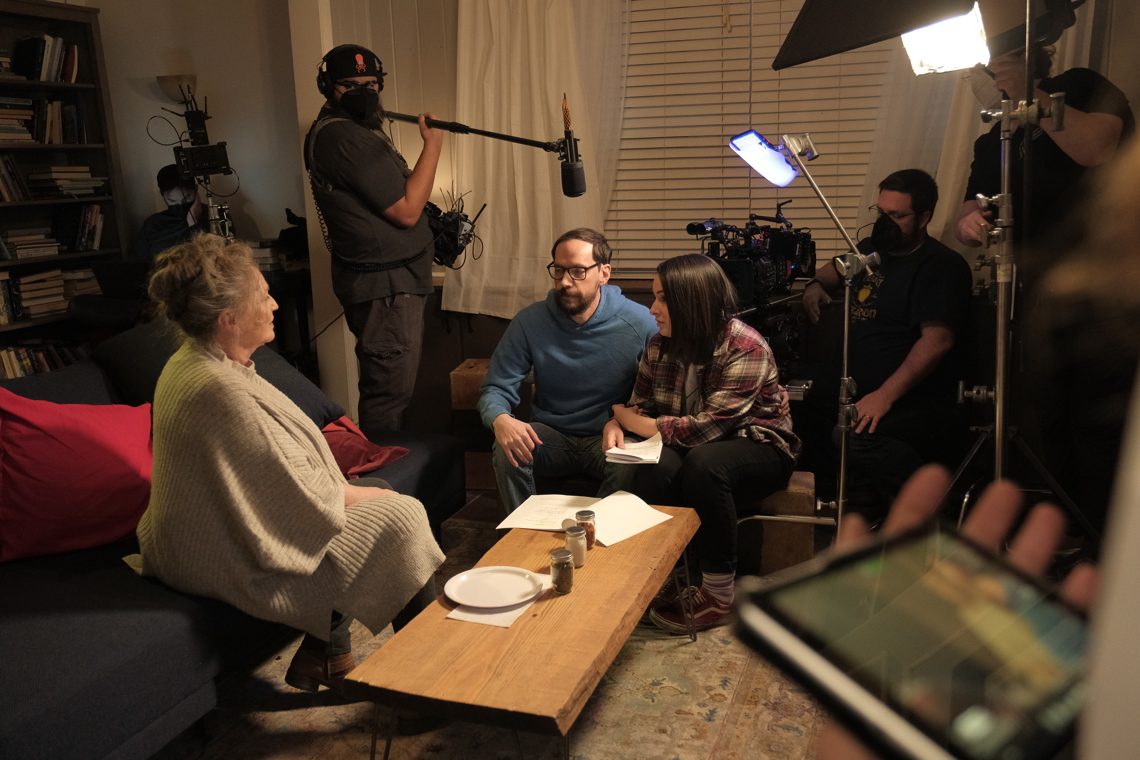
Large productions require large teams. Small productions benefit from agility.
A compact crew offers several advantages:
- Faster decision-making.
- Greater flexibility.
- Easier communication.
- More creative collaboration.
- Lower production costs.
Many filmmakers assume professionalism is directly connected to the number of people on set. It isn’t.
Professionalism comes from preparation, communication, and problem-solving.
Some of the strongest creative environments are built by small teams that understand each other’s strengths and genuinely enjoy working together.
Work With What You Have
One of the most useful habits independent filmmakers can develop is reverse-engineering their projects.
Instead of writing something impossible and hoping resources appear later, ask:
- What locations do I already have access to?
- Which talented people are available to collaborate?
- What visual opportunities exist within my current circumstances?
Sometimes your limitations become the inspiration.
Perhaps your friend’s apartment inspires an entire short film. Maybe the rooftop of your building becomes the perfect location for a dramatic confrontation. A local coffee shop might provide the atmosphere you didn’t realize your story needed.
Great filmmakers learn to see possibilities where others see obstacles.
Prioritize What Audiences Actually Notice
If you only have a limited budget, spend it strategically.
Audiences care most about:
- Story.
- Performances.
- Sound quality.
- Visual consistency.
- Emotional engagement.
They care significantly less about:
- The newest camera model.
- Expensive filmmaking accessories.
- Elaborate technical setups that don’t serve the story.
Poor audio will distract audiences immediately. Weak performances are difficult to ignore. A compelling story told simply can remain memorable for years.
Know where your resources matter most.
Creativity Is Your Biggest Production Value
Independent filmmakers possess one tremendous advantage over larger productions:
Freedom.
Small projects can:
- Experiment creatively.
- Move quickly.
- Take artistic risks.
- Adapt immediately when inspiration strikes.
You don’t need permission from multiple departments to change a shot or try an unconventional idea.
Creativity becomes your most valuable resource when budgets are limited.
Large productions often solve problems with money. Independent filmmakers solve them with imagination.
Stop Waiting for Perfect Conditions
Many aspiring directors spend years waiting for:
- Better cameras.
- Bigger budgets.
- Larger crews.
- Industry connections.
- Perfect opportunities.
Meanwhile, filmmakers with fewer resources are actively creating work, building portfolios, and developing their voices.
The truth is simple:
Perfect conditions do not exist.
Every project teaches something valuable. Every limitation encourages innovation. Every small production builds experience that larger productions eventually benefit from.
You do not need permission to begin creating meaningful work.
Big Vision Doesn’t Require Big Money
Cinema has never been about budgets. It has always been about perspective.
A filmmaker with a clear creative vision can transform ordinary locations into compelling worlds, simple props into powerful storytelling devices, and limited resources into unforgettable cinematic experiences.
The audience will not remember how much money you spent making your film.
They will remember how it made them feel.
So stop asking what your budget prevents you from doing and start asking what your creativity allows you to accomplish.
Because great filmmaking isn’t about having everything you need.
It’s about discovering just how much you can create with almost nothing at all.